
Residential Elevator Maintenance: What Homeowners Need to Know | ROC
Residential elevators/lifts are designed to make life at home easier, providing safe and reliable accessibility when you need it. Keeping that equipment properly maintained is an important part of helping it continue to serve your home for years to come.
Preventive maintenance supports the longevity of your lift while helping reduce unexpected downtime and the likelihood of more costly repairs in the future. With the right care along the way, homeowners can have greater confidence in their equipment and peace of mind knowing it is being properly looked after.
Residential Elevator Maintenance: Why It Matters
One of the biggest benefits of preventive maintenance is the opportunity to identify problems while they are still small. During an annual maintenance visit, a technician can inspect the equipment for wear, changes in operation, leaks, loose components, or other signs that something may need attention.
Finding these concerns early can make a significant difference in both the life of the equipment and the cost of future repairs. What begins as a relatively minor issue can turn into a much larger repair.
Annual maintenance also gives technicians the opportunity to test the lift’s safety features and verify that they are operating as intended. By identifying developing issues, testing safety features, and addressing wear along the way, preventive maintenance helps support the safety, reliability, and longevity of the entire lift.
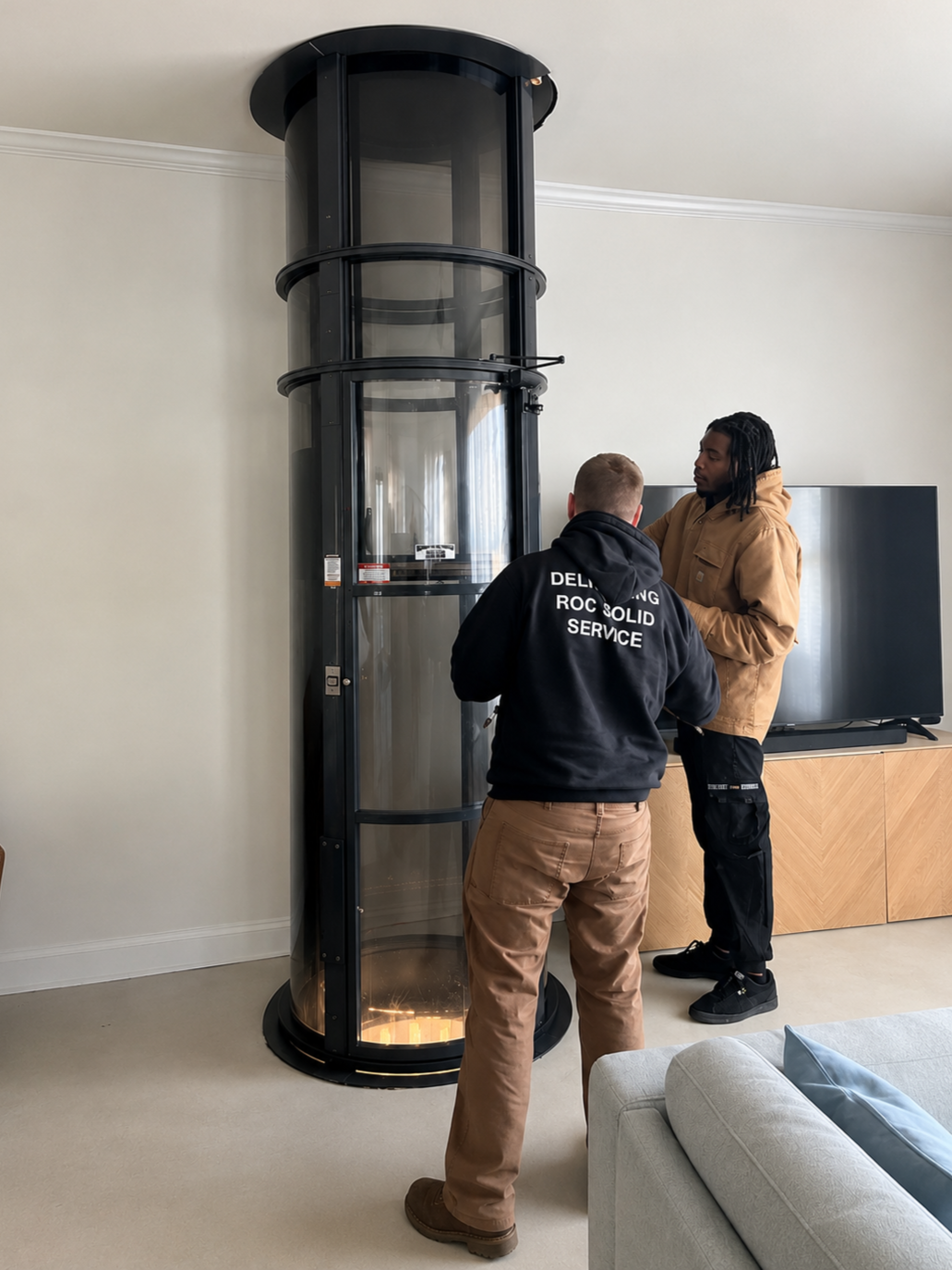
ROC Elevators technicians servicing a residential Pneumatic Vacuum Elevator.
What Is Included in Residential Elevator Maintenance?
Preventive maintenance includes a thorough inspection of the lift’s mechanical, electrical, and safety systems. The exact components will vary depending on the type of equipment, but each visit is focused on the overall condition and operation of the lift.
Technicians inspect the controller, wiring, electrical connections, switches, relays, fuses, and battery backup. Mechanical and drive components are checked for wear, leaks, and alignment. Rails, rollers, travel cables, and other moving components are also inspected for signs of wear or developing concerns.
Doors, gates, interlocks, and contacts are checked for proper operation, along with leveling at each landing. The lift’s safety features are also tested to ensure they are functioning as intended.
As part of the service, the pit and car top are inspected and cleaned as needed, mechanical components are lubricated, and necessary adjustments are made. Any wear, recommended repairs, or areas that should be monitored are then documented and discussed with the homeowner.
How Often Should a Residential Elevator Be Serviced?
For most residential lifts, once-a-year preventive maintenance is recommended. Keeping a consistent annual schedule helps ensure the lift receives ongoing care throughout its life rather than waiting until a problem occurs before having the equipment looked at.
Annual maintenance also creates a service history, giving technicians a better understanding of the lift and how its condition changes from year to year.
Residential Lift Maintenance by Elevator Type
Traditional Elevators
Traditional residential elevators have several mechanical, electrical, and safety components working together behind the scenes. Maintenance includes inspecting the controller, drive or hydraulic equipment, rails, gates, interlocks, wiring, and other electrical components. Mechanical components are lubricated as needed, and adjustments can be made to help maintain proper operation and leveling.
Safety systems are tested, and the entire system is evaluated for wear, damage, leaks, unusual operation, or anything else that may require attention.
Dumbwaiters
Dumbwaiters have their own set of mechanical and safety components that need attention to keep the system operating smoothly. Annual maintenance includes inspecting the drive equipment, controller, lifting components, and interlocks, along with lubricating mechanical components where needed.
Technicians also check alignment at each landing, test the unit’s safety features, and evaluate all accessible components for wear, damage, or changes in condition that could indicate a developing problem.
Vertical Platform Lifts
Vertical platform lifts require maintenance that focuses on both the operation of the lift and the structure supporting it. Technicians inspect the drive system, mounting brackets, foundation, gates, ramps, and safety pan, while also checking alignment at each landing and lubricating mechanical components as needed.
Safety features are tested, and the entire lift is evaluated for wear, damage, or anything that could affect its operation. Outdoor VPLs receive additional attention for rust, corrosion, water exposure, and other effects of being exposed to the elements year-round.
Shaftless Elevators
Shaftless elevators have a unique design, so their maintenance needs differ from traditional residential elevators. Technicians inspect the drive system, cables, mounting brackets, gates, interlocks, and other mechanical components, while lubricating appropriate parts as needed.
Alignment at each landing is checked, safety features are tested, and all accessible components are evaluated for wear, damage, or changes that could affect the operation of the lift.
Can Preventive Maintenance Reduce Repair Costs?
Yes. One of the best things you can do to reduce the long-term cost of owning and maintaining an elevator is keep up with preventive maintenance. Like any mechanical equipment, the parts within a residential lift naturally age and wear over time. When that wear goes unnoticed, it can begin to place additional strain on surrounding components, turning what may have started with one part into a much larger repair.
During preventive maintenance, technicians may be able to lubricate, adjust, realign, or service components before wear reaches the point where replacement is necessary. This can help preserve both the affected component and the other parts of the system that depend on it.
Not every repair can be avoided, and components will eventually reach the end of their service life. However, identifying wear and addressing it at the right time can help prevent unnecessary damage, extend the life of existing equipment, and significantly reduce the potential for more costly repairs in the future.
When considering the overall cost of ownership, it’s helpful to understand both ongoing maintenance and the initial residential elevator cost. For a full breakdown of installation pricing and the factors that affect it, read our How Much Does a Residential Elevator Cost in 2026? | SouthEast Home Elevator Cost Guide — ROC Elevators .
Benefits of a Residential Lift Maintenance Agreement
A residential lift maintenance agreement helps homeowners stay consistent with preventive maintenance while providing additional support when service or repairs are needed. Instead of treating annual maintenance and unexpected service as separate events, an agreement creates an ongoing relationship with a company that becomes familiar with your equipment and its service history.
For ROC Elevators customers, our Annual Maintenance Agreement includes one complete annual preventive maintenance visit, along with priority scheduling, unlimited technical support, 10% off parts, and 10% off labor for additional repairs. Agreement customers also receive a reduced service-call rate of $550 instead of the standard $750 when service is needed outside of annual maintenance.
The biggest benefit is having a plan in place before you need one. Staying on schedule with residential lift maintenance while having access to additional service benefits can make caring for your equipment easier and help reduce costs when future service or repairs are needed.
Stay Ahead of Your Next Service
Keep annual maintenance simple with a ROC Elevators Maintenance Agreement. Contact our team to learn more about our maintenance agreements and get your residential lift on a consistent preventative maintenance schedule.
Frequently Asked Questions
How Much Does Residential Elevator Maintenance Cost?
Residential elevator maintenance costs can vary depending on the type of elevator, location, and whether replacement parts are needed. For new customers, ROC Elevators’ standard service call is $750, with any necessary parts quoted separately.
For homeowners looking for ongoing preventative maintenance and reduced service costs, we offer an Annual Maintenance Agreement. See the breakdown above for pricing, what’s included, and the additional benefits of the agreement.
How Often Should a Residential Lift Be Serviced?
For most residential lifts, preventive maintenance is recommended once a year. Keeping a consistent annual schedule helps ensure the equipment receives ongoing care throughout its life.
How Long Does Residential Lift Maintenance Take?
Most residential lift preventative maintenance visits take approximately 1–2 hours. The exact time can vary depending on the type of lift, number of landings, and overall condition of the equipment. If an issue is discovered that requires additional troubleshooting or repair, additional time may be needed.
Can I Perform My Own Residential Lift Maintenance?
Residential lift maintenance should be performed by a trained elevator technician. Elevator systems contain mechanical, electrical, and safety components that require the proper knowledge and experience to inspect and service correctly.
What Are Signs My Residential Lift Needs Service?
The best thing a homeowner can do is pay attention to any change in the way their lift normally looks, sounds, or operates. A change doesn’t always mean there is a major problem, but it is always worth bringing to your elevator company’s attention.
If you notice a different sound, a change in movement or leveling, something different with a gate, a warning light, a visible leak, or simply something that doesn’t seem quite right, reach out and ask. No question is too small when it comes to your elevator. At ROC Elevators, our customer service team is always happy to talk through what you’re noticing and help determine whether it’s something that needs a technician’s attention.
Does a Residential Lift Need Maintenance If It Is Rarely Used?
Yes. Preventive maintenance is beneficial for any mechanical equipment, whether it is used every day or only occasionally. Time alone can affect equipment, so limited use does not eliminate the need for annual maintenance.
Depending on the type of lift, it’s important to actually use the equipment. Hydraulic elevators, for example, rely on the movement of hydraulic fluid to keep certain components properly lubricated. Using the elevator keeps that fluid moving through the system and helps prevent components from drying out.
Annual maintenance and continued use can go a long way toward keeping the equipment in good condition.
What Is the Difference Between a Residential Elevator and a Residential Lift?
The terms "residential elevator" and "residential lift" are often used interchangeably, but they can refer to different types of equipment. A residential elevator typically travels within a hoistway. It can serve multiple floors, while the broader term “residential lift” may also include equipment such as shaftless elevators, vertical platform lifts, and other home accessibility solutions.
The right option depends on your home, available space, number of floors, accessibility needs, and project goals. ROC Elevators can help you compare your options and determine the best residential elevator or lift solution for your home.
Schedule Your Residential Elevator Maintenance
The best time to take care of your elevator is before you need a repair. Staying consistent with annual preventative maintenance can help extend the life of your equipment, reduce the potential for costly repairs, and give you confidence that your lift is being properly cared for.
Whether you have a traditional residential elevator, shaftless elevator, dumbwaiter, or vertical platform lift, ROC Elevators is here to help keep your equipment on track year after year.
Ready to schedule your annual maintenance? Contact ROC Elevators today to schedule service or learn more about our Annual Maintenance Agreement.