
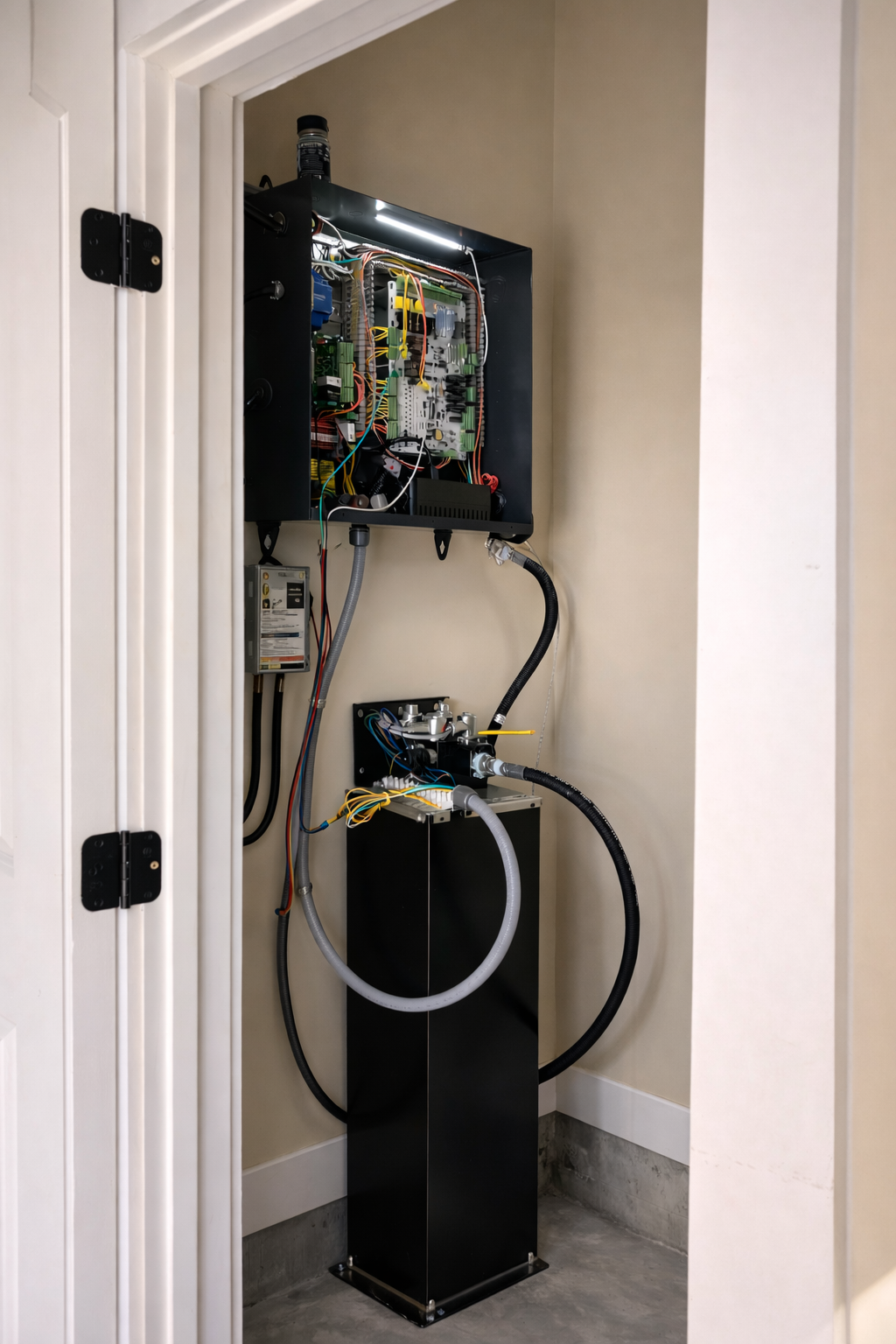
Hydraulic Elevator
A hydraulic residential elevator is a shafted system installed inside a framed hoistway built during construction or renovation. The elevator operates using a hydraulic pump and cylinder to raise and lower the cab, providing smooth and reliable travel between floors. Hydraulic elevators are commonly used in homes because they allow for larger cab sizes and higher weight capacities.
These systems are typically installed in a standard hoistway measuring approximately 5 feet by 5 feet, with a pit depth of about 8–12 inches and roughly 96 inches of overhead clearance above the top landing. Hydraulic elevators can support up to 950 pounds of capacity and are commonly used to serve two to four floors, making them a dependable solution for multi-level homes. The cab can also be customized with a variety of finishes, fixtures, and gate styles to complement the design of the home.
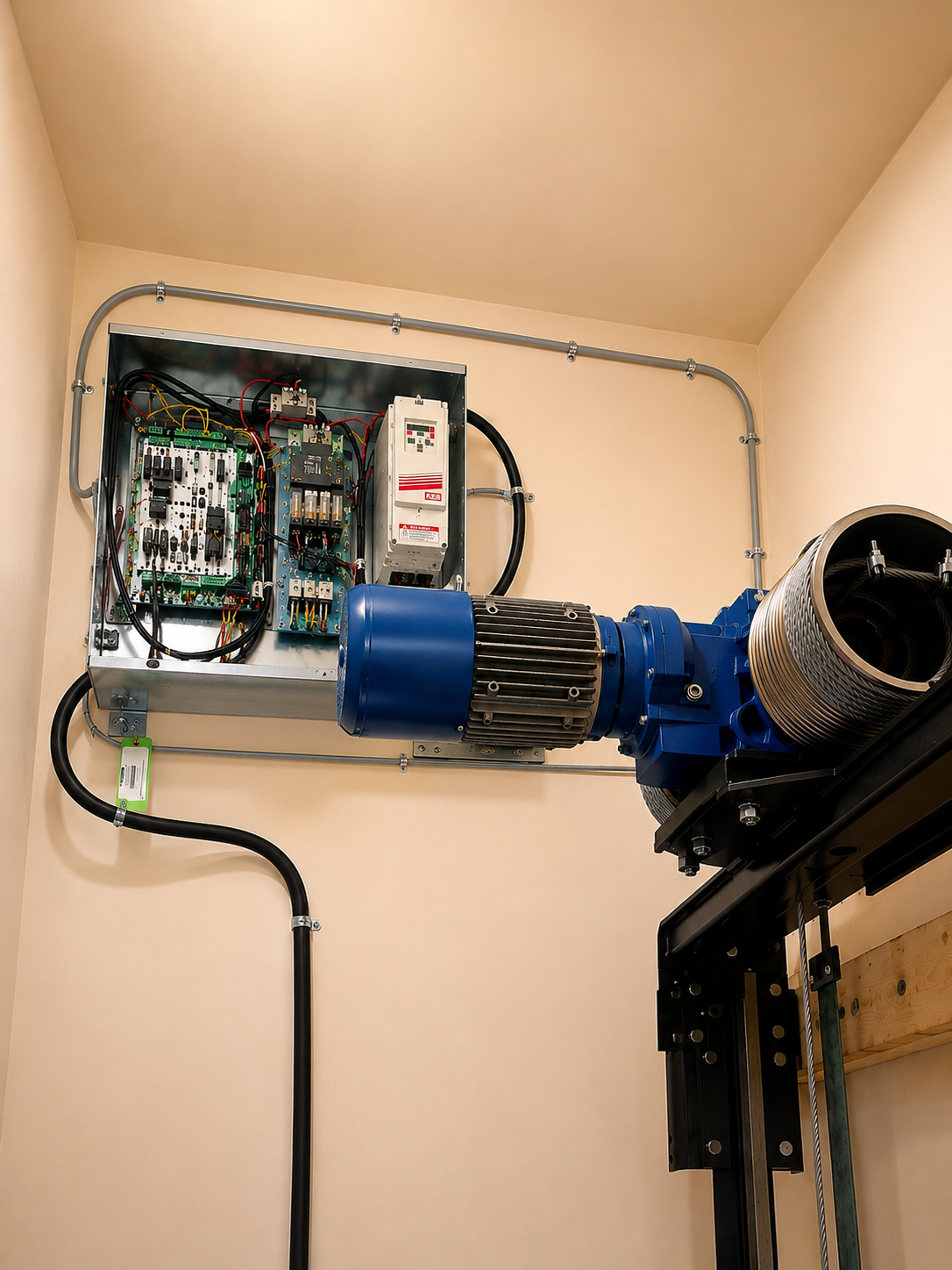
Winding Drum Elevator
A winding drum residential elevator is a shafted system installed inside a framed hoistway built during construction or renovation. This type of elevator uses an electric motor that winds and unwinds steel cables around a drum to raise and lower the cab, providing reliable travel between floors.
Winding drum elevators are typically installed in a standard hoistway measuring approximately 5 feet by 5 feet, with a pit depth of about 8 inches and roughly 96 inches of overhead clearance above the top landing. These systems can support up to 950 pounds of capacity and are commonly used to serve two to four floors. Winding drum elevators also allow for a variety of cab finishes, fixtures, and gate options so the elevator can complement the style of the home while providing convenient access between levels.